
There are so many idioms about discipline online that it is hard to settle on one that I dislike more. You hear it often from those in the fitness or health industry, the productivity realm, or those promoting hustle culture for a profit. The message is similar throughout, motivation isn’t consistent, but discipline is. You have to discipline yourself to do the things that you don’t want to: exercise, focus, produce, sell; to get the reward that you are seeking: the body, the empty checklist, the promotion, or the successful business. I disagree. In so many ways, I disagree. Simply put, discipline is one of many variations of motivation, and for me, it’s not even a good one.
Motivation is immaterial. Many theoretical concepts have been developed over time to understand and categorize motivation. Think, Abraham H. Maslow’s Theory of Human Motivation, which developed what is widely known as Maslow’s Hierarchy of Needs; or, an old philosophical theory, Psychological Hedonism, which argues that behaviour is driven by the seeking of pleasure and the avoidance of pain; or, the variety of more recent theories that have been developed to attempt explain the data derived Yerkes-Dodson law that describes the arousal-performance relationship. There is so much information available about motivation that I could not summarize it in a single personal essay.
What you may note, if you dive a little into the various theories of motivation, is that they often stem from a purpose. Increased employee productivity, relapse prevention, sports performance, purchase motivation, the list goes on. All of these seek insight into how to coerce and manipulate others to perform as desired. Yuck.
At its root, motivation is what drives human behaviour towards a certain outcome or goal. Discipline, not in the sense of punishment, but as a concept of self-control, is a way we suppress our urges or desires that don’t align with a certain outcome. Too similar to not be a variation of one another, in my opinion. Ultimately, this part is a semantic argument, which is a digression from what I would like to share: a self-reflection on motivation and why I will not be prescribing discipline or self-control as a means to an end.
For me, it’s never worked. Life happens, things get in the way, and consistency dies. The after effect is guilt, shame, and a whole slew of other negative emotions directed inwards towards myself. Discipline then shifts to its other meaning: punishment. I’ve had enough of that through my life, thank you very much. So what’s the alternative?
How about a perspective shift? Rather than viewing motivation through the lens of a corporation, a management team, social sciences, or anything else that groups and classifies people seeking to gain from them, let’s look through a lens of self. Motivation is personal and varied for each individual, which is why there are so many theories, most of which acknowledge its complexity and are never fully encompassing. Here are some tools I use to help you get moving in the direction you desire.
Framing
Sometimes the best solutions are the simplest ones. Discipline can lead to self-deprecation, not in a way that just makes you humble at the slightest failure. It doesn’t need to be a complete failure; it can merely be a setback, a shifted deadline, or a day of indulgence, and we are turning inwards and devaluing ourselves. Taking the negativity out of shortcomings and offering yourself grace can be enough to keep you moving in the right direction.
I first heard the concept of re-framing discipline as devotion in a YouTube video during my productive girlie era. I still love and consume productivity content, I am a data girl, but now, I use it to learn about myself, rather than to aid in production for others. The video was created by Mae Alice Suzuki. She doesn’t go too deep into the concept, but the simple statement she made had me take pause and write notes on all the thoughts that came to mind. Although I have shifted from the hustle culture and am leaning into a softer era, re-wiring my nervous system, and embracing creative expression, productivity will always have a special place in my heart. I consider myself an analytical creative.
The idea presented in the video was to commit to devotion rather than discipline. I loved this thought process. Having a goal, target, or purpose that you are working towards and being devoted to it was so much more romantic than disciplining yourself to do it.
Sometimes that’s enough. Romanticizing your life and creating whimsy, something that I have been called to do more and more the older that I get, can certainly change behaviours. You see this when people choose to take the scenic route rather than their usual drive home, or in the increased popularity of slow mornings. There are many situations where a shift in perspective could prove rewarding.

The word devotion evokes emotions. The term is often paired with faith and worship; now consider those same words in relation to your body.
I have faith in my body.
I worship my body.
Those statements make me feel a lot more motivated to treat my body in the way that I know it should be. Especially over guilt and shame when I don’t. Framing like this helps me exercise, spend time outside, nourish my body, stick to a skin and self-care routine, and even justify the fun things like clothing, piercings, and tattoos.
Breaking Free and Breaking Down
You might need to go deeper, though. It could be a matter of discovering what motivates you, which is a question that requires soul-searching and ruthless honesty. What are you trying to achieve and why are you trying to achieve it? The answer to this is likely different in each situation, so you may need to consider it several times.
Personally, I like the 5-whys concept. Originally developed for use at Toyota Motor Company, it is a root cause analysis technique intended to help someone determine the root cause of a fault or issue they are facing. Examples for developing this tool are specific to production. Critics of the technique argue that individuals facing the same problem may identify different root causes depending on the path of questions they answer, which is valid. Yet, when determining your personal behaviours, varied personal perceptions are very much relevant. One person not being motivated to work out is going to have a different root cause than the next. That’s the point.
There are two ways you can use this: asking why and asking why not. I use each of these for separate reasons. The first, asking why, I use to determine if what I am trying to accomplish, and failing at, is something that I truly want. The second asking why not, I use to determine what my barriers are to accomplishing the task.
Recently, I have stopped making so many meals for our home. Here is what the thought process was, which stemmed from a very simple question. I do this so often that it has become a way of thinking for me. It helps me to come up with a solution to a thought quickly rather than ruminating over it.
1 – Why is there not food that I want to eat in the house? – This is a why not.
I haven’t been grocery shopping consistently. All of my shopping has to be done online and delivered, since the accident. Which is so convenient, despite the added cost. This has resulted in a lot fewer impulse buys, which we love. Yet I have shopped less frequently.
2 – Why are you not shopping as much? – This is a why not.
Food has been going to waste. I have been tossing unused leftovers, and fruits and vegetables that turn before they get eaten. I despise food waste.
3 – Why has food not been used? – This is a why not.
The meal plans that I make have not been effective. Additionally, food hasn’t always been stored in ways conducive to preservation.
4 – Why are the meal plans not working? – This is a why not.
Meals have become difficult to plan and manage; my daughters have their own schedules, with my youngest being with her father half the time. My son spends time with my parents frequently, and visits there can be spur-of-the-moment. My partner has recently jumped into business on his own, and his schedule is unpredictable at best. I plan for five people, but end up feeding only myself. When others are around, everyone reaches for easy or already-prepared foods. My daughters and partner are hungry when they get home and often snack, so they are not hungry once dinner time rolls around.
5 – Why are we trying to make dinners in the evening work? – This is a why.
We are trying to behave within a social construct. The expectations of eating supper together as a family are what people envision once they have families of their own.
A bit of an erratic train of thought, considering I just wanted a snack. But the realization held true. I want to eat when I am hungry and eat things I enjoy or that my body craves. So why would I expect anything different from my family? As a result, I have stopped cooking suppers most nights, or I am preparing them for the next few days. Instead, I prepare healthy snacks and other things. I store things in ways that help them last or are convenient enough that everyone reaches for them, and I have organized the shit out of my fridge.
It has also allowed me to think creatively about what you can do with food. I used strawberry tops to make flavoured vinegar. I used the fruits I had dried for a Yule-themed tree my daughter and I made to create a curtain for my powder room window. I will chop things up that are starting to turn and make myself a simmer pot.


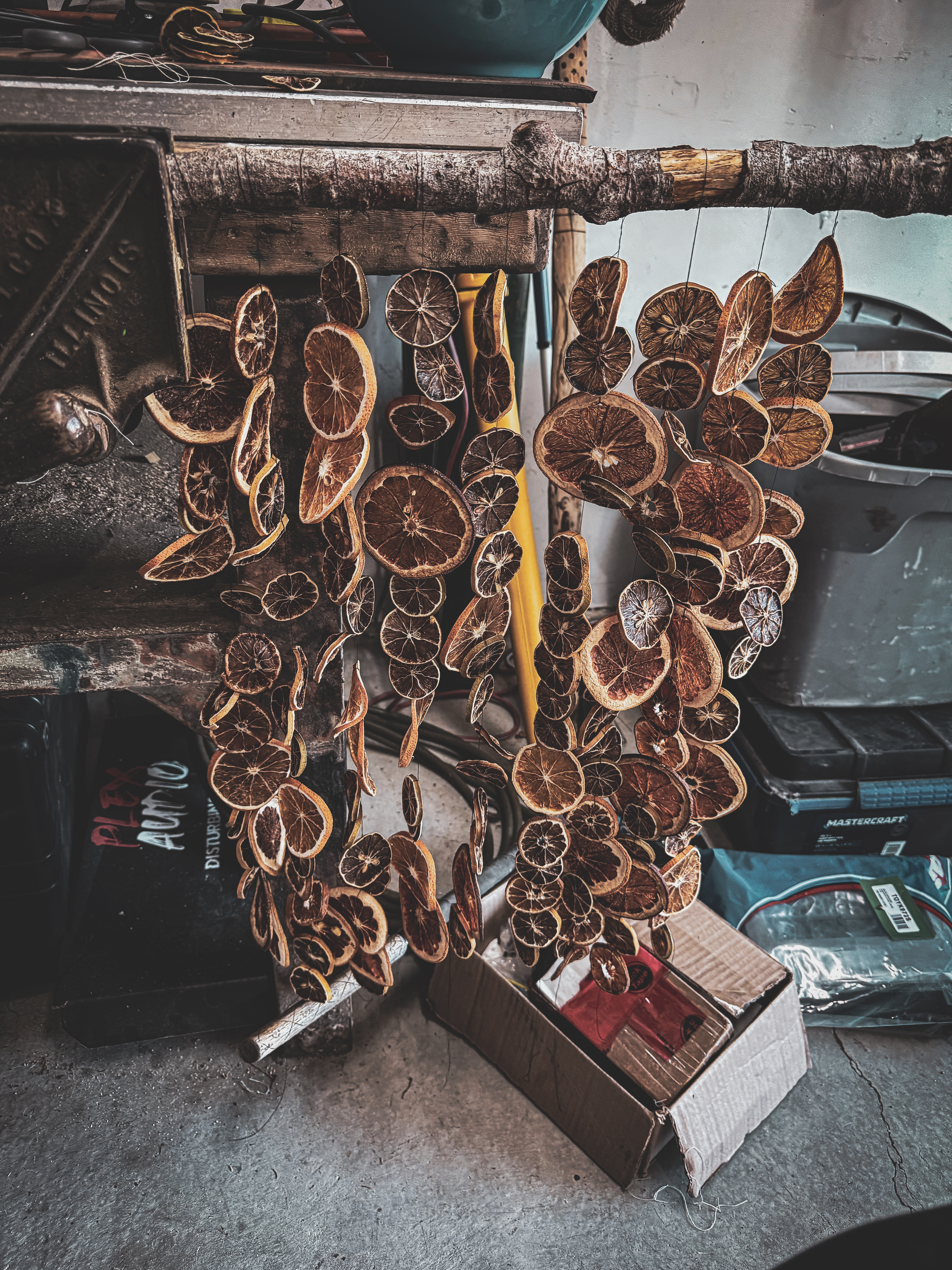
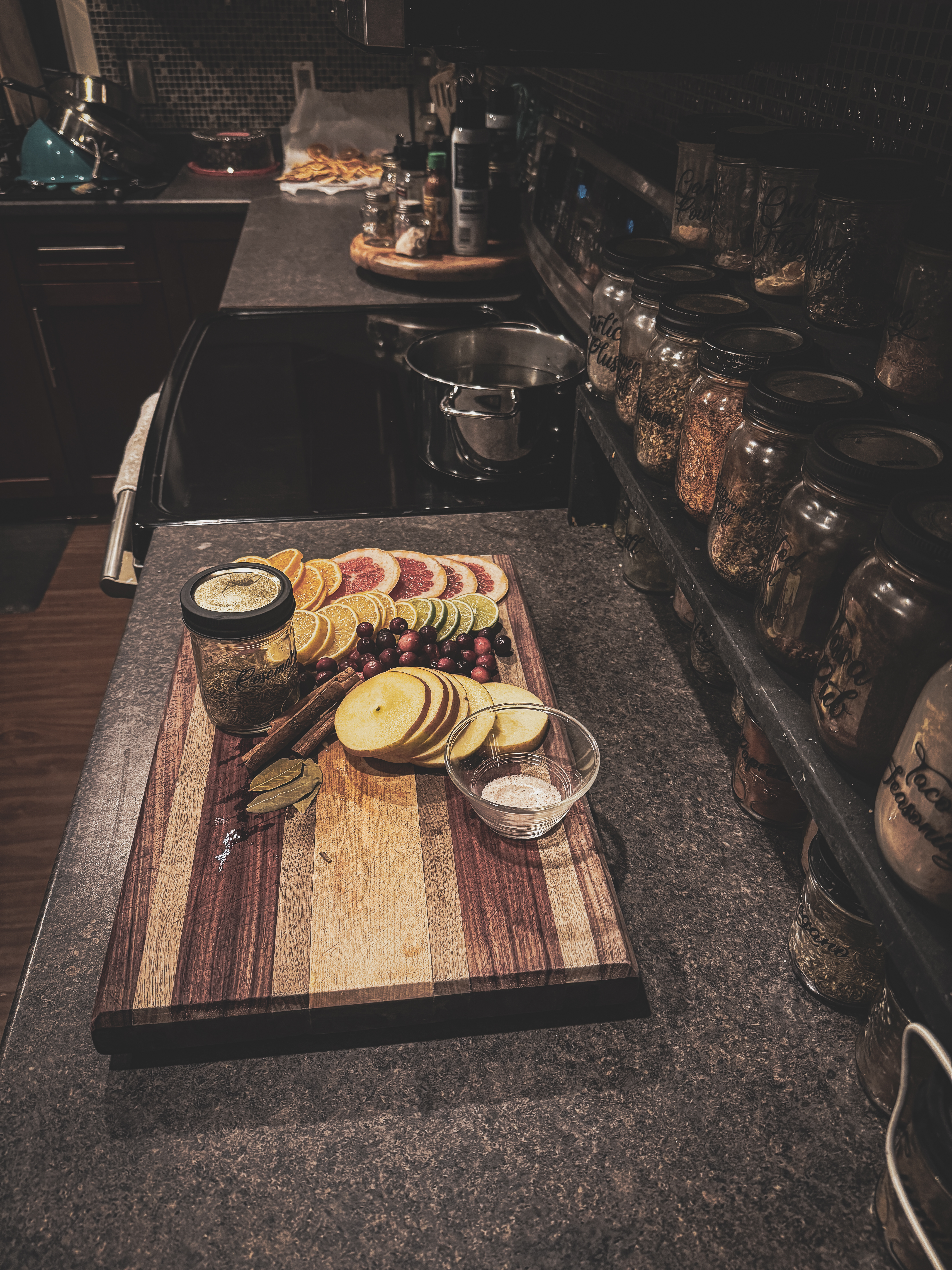
I always have a bowl of cleaned berries, jars with chopped veggies, soups or salads in individual portions, and charcuterie items sliced and on hand. The result, we are all eating a lot healthier, no one is complaining, I can food prep when my body feels like it can, and I have a fridge that is pleasing to look at.
This is the perfect example of something I have decided to break free from. I am behaving outside social expectations and making an effort not to let myself care about the things that were confining me to that cage. This is no longer aligned with me, and I have decided to let go and move on.
Let’s consider something that leads in another direction, though. You may need to determine whether the goal you have aligns with what you want, but there are simply barriers you need to break down first. I have recently set a goal to own a larger piece of property. It is a long-term goal, 5 or more years down the road. This was my thought process:
1 – Why do you want to own property? – This is a Why.
I want a space where I can grow and process my own food; raise, catch, and hunt my own meat; enjoy my hobbies without judgment; connect with nature and create; and live sustainably from the land.
Now, this is where it can get complicated. I want this option for multiple reasons. You may have to think through each different path. It might take some time, and it may even require writing it down in a brain map to define the process clearly. Let’s consider the food-related items together, growing and processing food, along with raising, catching and hunting my own meat.
2 – Why do you want to grow and process your own food, and raise, catch and hunt your own meat? – This is a Why.
I view food as medicine. Modern-day processing, even through growing, shipping and genetic modification, leaves me feeling like I have little control over what is being put into my body. As someone who has autoimmune issues, these things can impact my health. I also want to provide food that nourishes my family. I want them to have a healthy relationship with food. I want to cut costs where possible, in an economy where things are getting more difficult every day.
3 – Why can you not do these things now? – This is a Why Not.
I currently do, to the best of my capacity. I have some fruit trees, and would like to plant a garden. I do try to make as much as I can from scratch, even cleaning supplies. I process what is available, including meat, using a pressure canner. I try to get food that is as local to me as possible.
Now this is where we might stray, hell, it sounds like I am already accomplishing most of what I want. The limiting phrase here is “to my capacity,” so let’s wander down that path.
4 – Why is your capacity limited? – Phrased as a Why, but to me this is a Why Not; we are considering why we are not doing more.
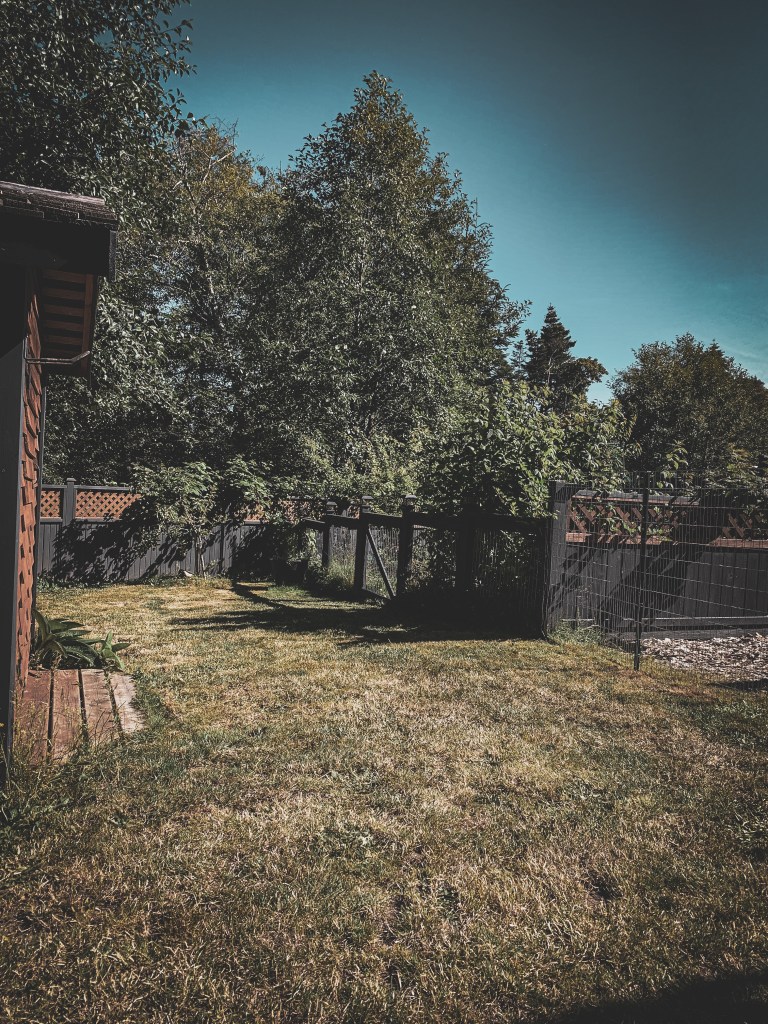
Time, money and space. I have a yard I could garden in, but the size is limited, as would be what I could grow. I also intend to grow indoors, including hydroponics and herb gardens. Both of these require an investment in equipment and the time to maintain it. I have had to prioritize working to make ends meet, which results in less time to work around the house. I do not have space for animals other than my pets and cannot even raise chickens (my yard is 500 square feet below the municipal by-law limit!).
5 – Why would property solve the limited capacity?
For me, this is the final ask. In this scenario, I am trying to determine whether this lifestyle change is a solution to the root problem. The property size I would like is more or less unattainable in the area where I live. This would mean uprooting my family and settling in a more remote area. My children are established in this community, and my youngest is about 4 years away from graduation, which is why this is a longer-term goal. Moving to a remote area will result in lower property costs. It would also result in a change of employment. The goal would be to find a balance between reducing expenses and having the time to invest in a more homesteading lifestyle. Property would allow me to curate the space to meet our needs—tiny homes for what would then be my adult children. I would be able to build a garden large enough to sustain us and, even better, contribute to the community we settle in. We would be able to build outbuildings to process meat, something that cannot be done in a suburban community.
What I have determined with this exercise is that this goal does, in fact, align with my core values, the life that I want to live. I gain a huge amount of motivation to work towards things that give me purpose. What purpose is for you might look vastly different. I encourage you to consider your core values so you can live in alignment.
Environmental Curation and Habit Building
The final thing I work towards when motivating myself is reducing barriers in my environment and habits. We live in a world full of modern conveniences, and nearly anything can be made to look aesthetic. In that sense, many barriers could be considered excuses if you don’t make the effort to correct them. If you’ve done the above and determined that the goal you have aligns with who you are and what you truly want, make it easier on you and your future self by making changes in your environment that reduce friction. You’ll be more inclined to put in the work.
Making the Right Environment
I am terrible at taking medications. Which can be problematic when you have autoimmune issues, most medications require consistency. Oftentimes, you’ll hear of people who place their morning meds beside their coffeemaker so that they remember to take them in the morning. My coffeemaker is two flights of stairs down from my bedroom, and I am not consistent about when I drink it, so this doesn’t work for me. Thankfully, the medication I am on doesn’t have a specific time of day it needs to be taken. So, what am I consistent with?
My bed. I am very consistent with my bedtime. I have started building a sanctuary in my bedroom area. I say area, because I have turned the top floor of my house into a Primary Suite. It has been a lot of work, and I have a lot more to do, but my bed is awfully comfortable, even if it isn’t aesthetically pleasing yet. After the day, I eat my last meal and do a quick tidy, then retire to my space to find peace and relax. Sometimes that’s reading in bed, sometimes that is a bath, but I am up there, period. So I picked a time later in the evening, when I knew I would be upstairs and not asleep yet. For me, this is 9 pm. I probably could have gone a little earlier, occasionally I am up there by 5 pm, but I wanted to accommodate those rare nights when we get to go out for supper, or we have an event.
I took my meds and my supplements and placed them beside my bed. Now, like most. I am not super interested in having a bunch of pill bottles on my nightstand. So, we add a little whimsy and make it aesthetic. I found small, apothecary-style containers and use them to add to the decor. If you’re worried about the safety mechanisms on the pill bottles, that’s fair, but what about an aesthetic bag? There is such a variety of makeup and pencil bag designs and sizes; I am certain you could find something that fits your vibe. I also set a medication reminder on my phone, because I am a data nerd, and tracking things helps me. My reminder goes off, I reach over and take my pills, no excuses because there is no barrier in my way. I would also note that I always have a waterbottle with me, so there is no issue there either. A simple change to my environment, and there are no excuses. I have never been more consistent in taking my medications.
Building the Right Habits
I am a huge proponent of lists, though I would completely understand why they don’t work for everyone. I use them to clear my head, which is purpose enough, but I do want them to help me work towards my goals, too.
I started journaling after the accident. Something I have always wanted to do but never been able to stick with. I have always loved bullet journaling, another thing I never stuck with past previous New Year’s resolutions, and took this opportunity to combine the two. I have changed up a few things each month as I have been learning what works for me and what doesn’t. One thing I noticed is that I write extremely detailed lists, but I struggle to prioritize. With that, I would find myself feeling less than happy with what I had accomplished that day, even though I had been going nonstop. Historically, I have tracked my time for a month or so at a time (like I said, data nerd), and I often revisit doing this to get a good idea of how much time it takes to accomplish things. I use this as a tool when I feel like I am never doing enough.
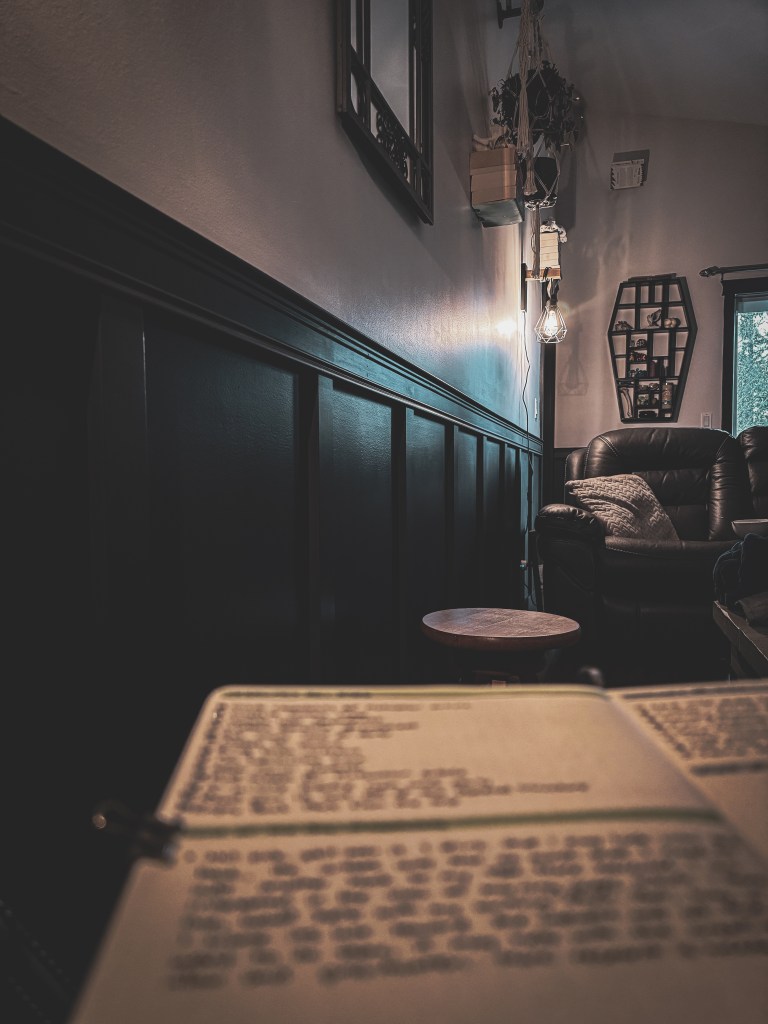
One habit I developed to combat ineffective lists was using brain-dump lists and a little end-of-the-day planning sesh. I carry my journal with me everywhere, literally, no different than my phone and my water bottle. At the end of the day, I sit with my journal, review my digital brain-dump lists, and plan what I want to do the next day. I pick out my outfit, check my appointments, and consider how I will be feeling the next day. This usually doesn’t take more than ten minutes. It helps me avoid decision fatigue when I’m overstimulated. It also gives me the grace to let myself stop when the list is complete. If I am having a low-productivity day, and all I have in me is to do the items I have prioritized on my list, then that is enough. I can stop, focus on self-care, and I still feel accomplished.
After all of that reflection, you may find that you are still not working towards your goals, and strict format discipline is what works for you after all, and that’s totally okay. Find what works, and utilize it until it doesn’t. You can always revisit the question of what motivates you, because time changes everything.


 Sarah Wilson
Leave a comment